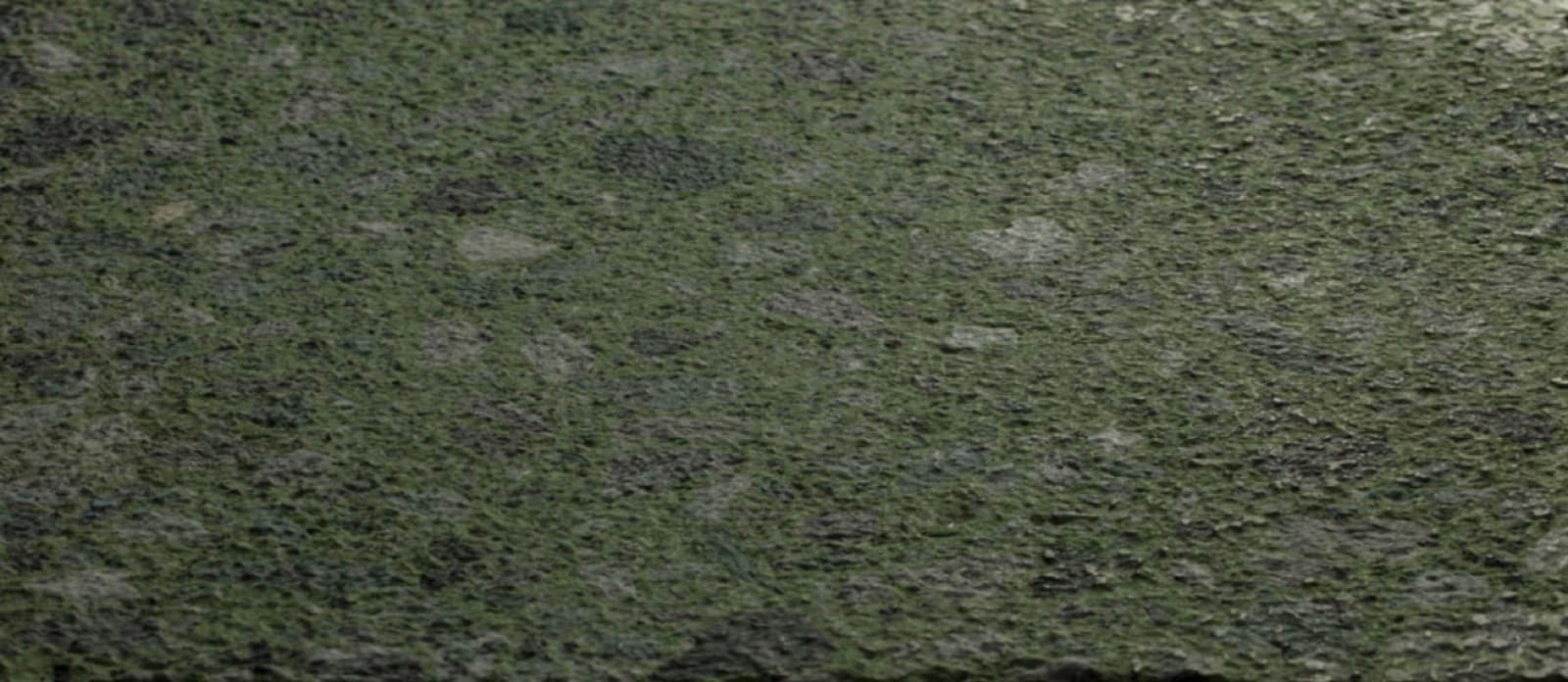
Craft
How terrazzo is made
From natural materials to a unique cast stone.
Production in six steps
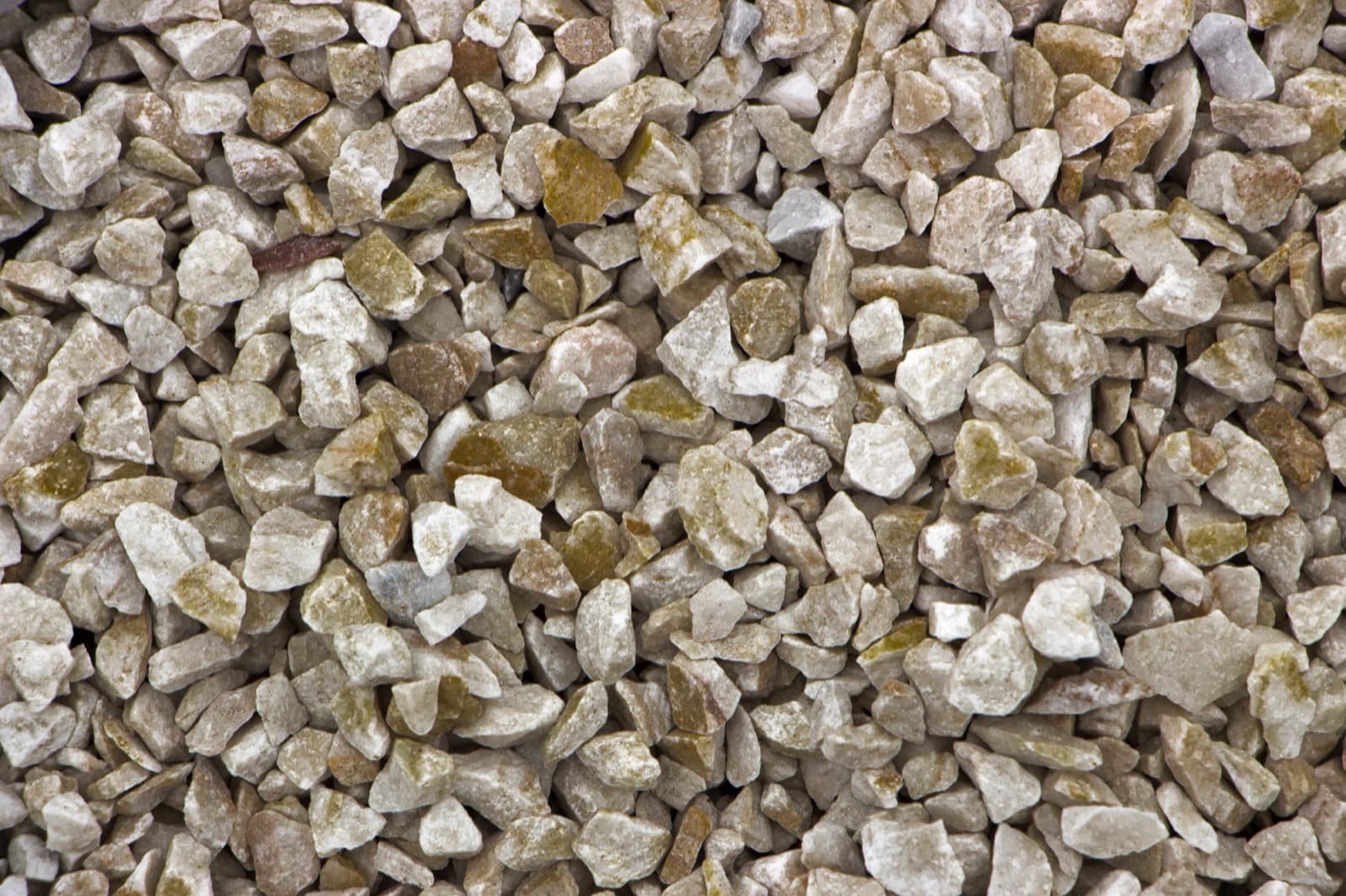
Selecting the materials
Good natural materials are carefully selected for every terrazzo. Marble granules, cement and water form the basis of a durable result.
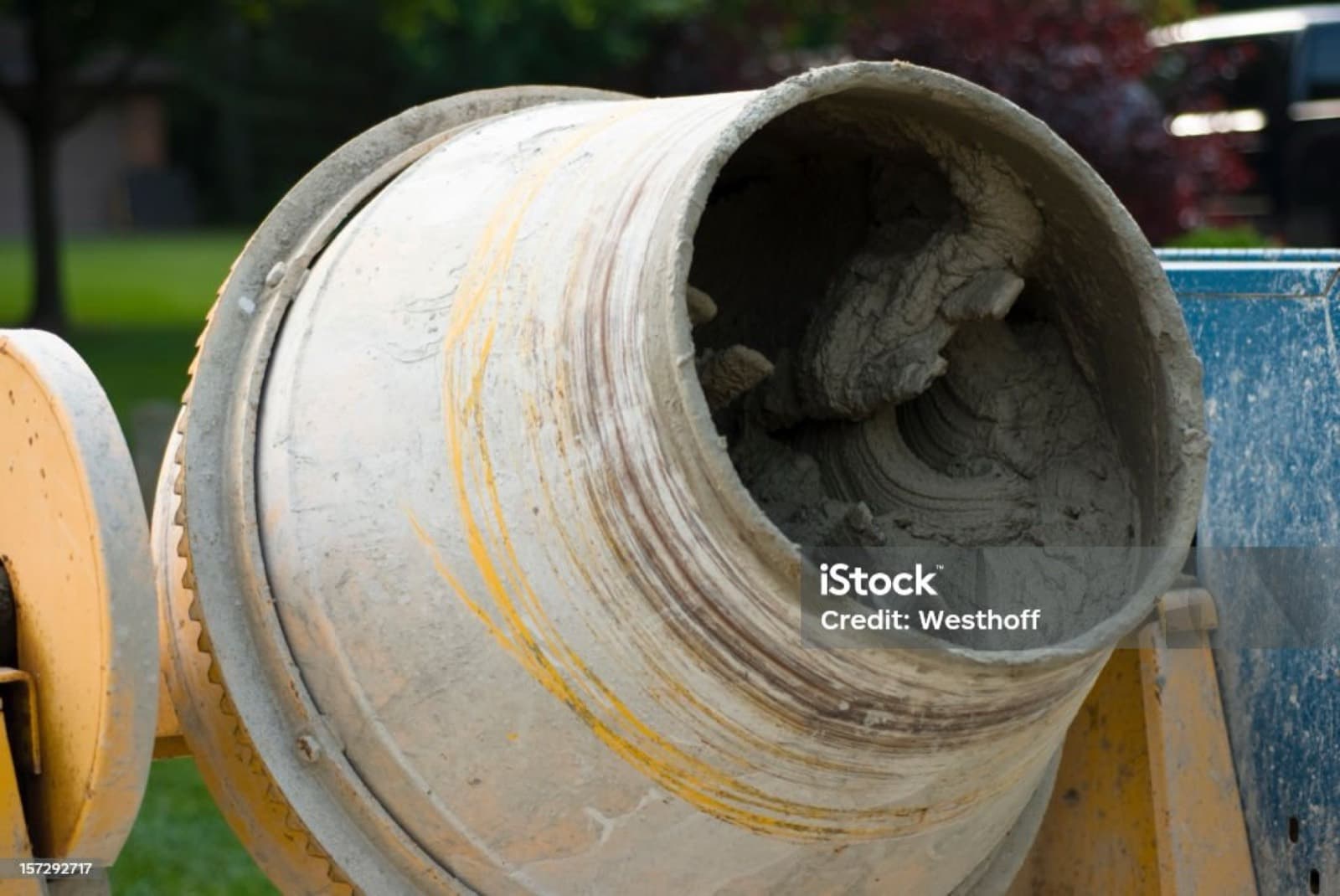
Mixing the cement
Cement and water are mixed into a smooth, creamy paste that binds the terrazzo.
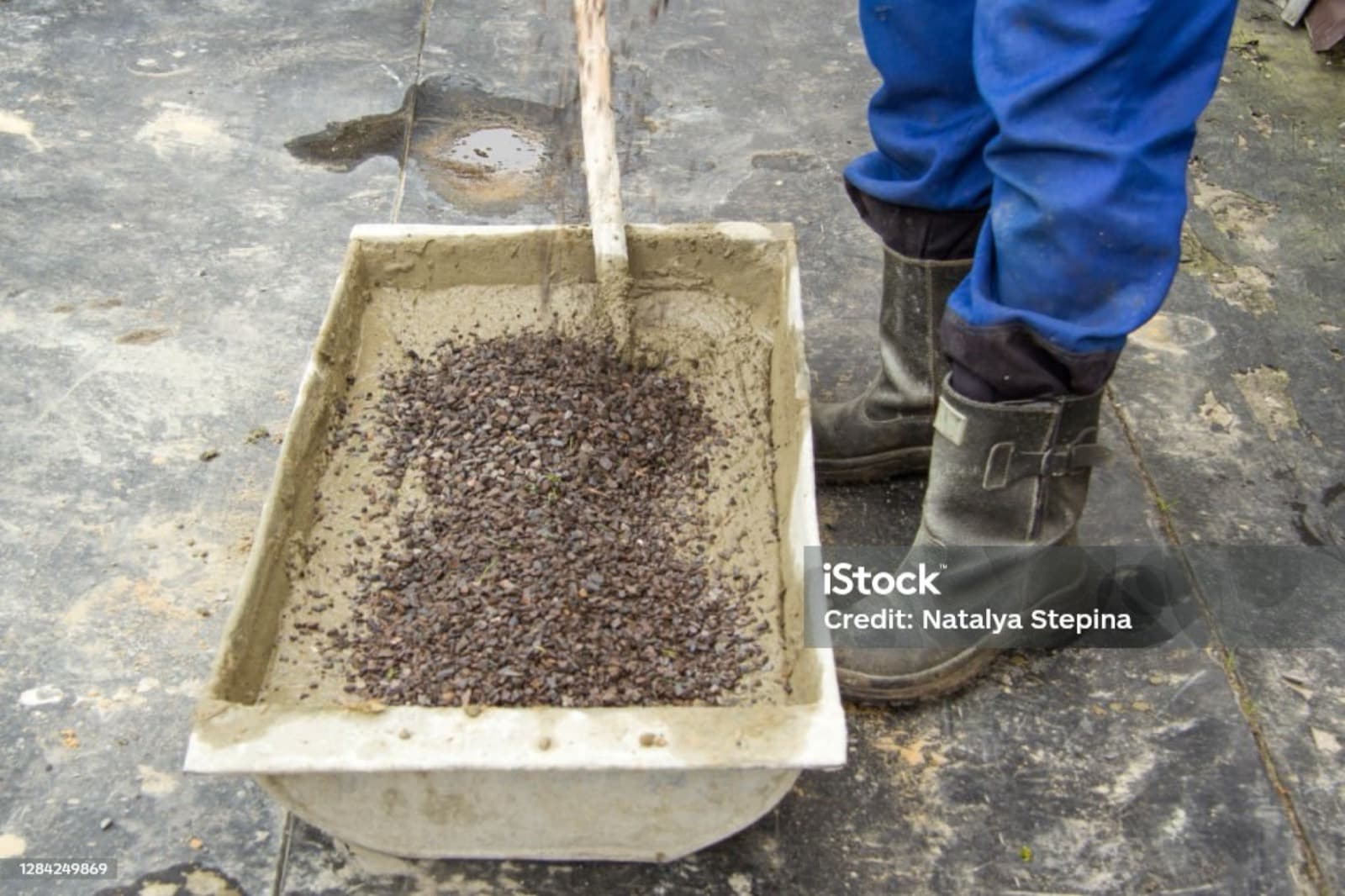
Making the terrazzo mix
Cement and marble granules are mixed thoroughly until a uniform terrazzo mass is formed.
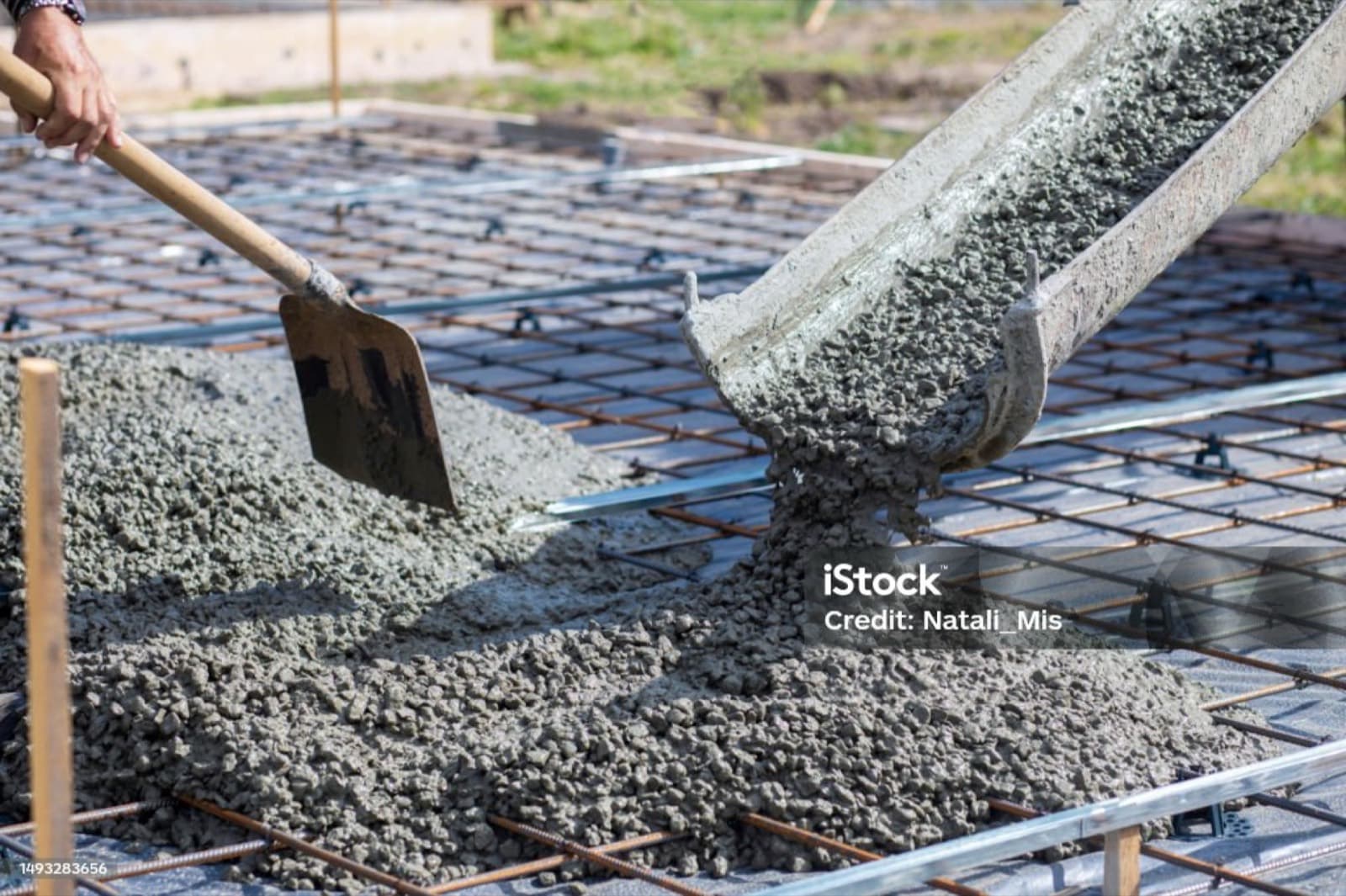
Casting and compacting
The mix is poured into the mould and compacted to avoid air bubbles and achieve an even structure.
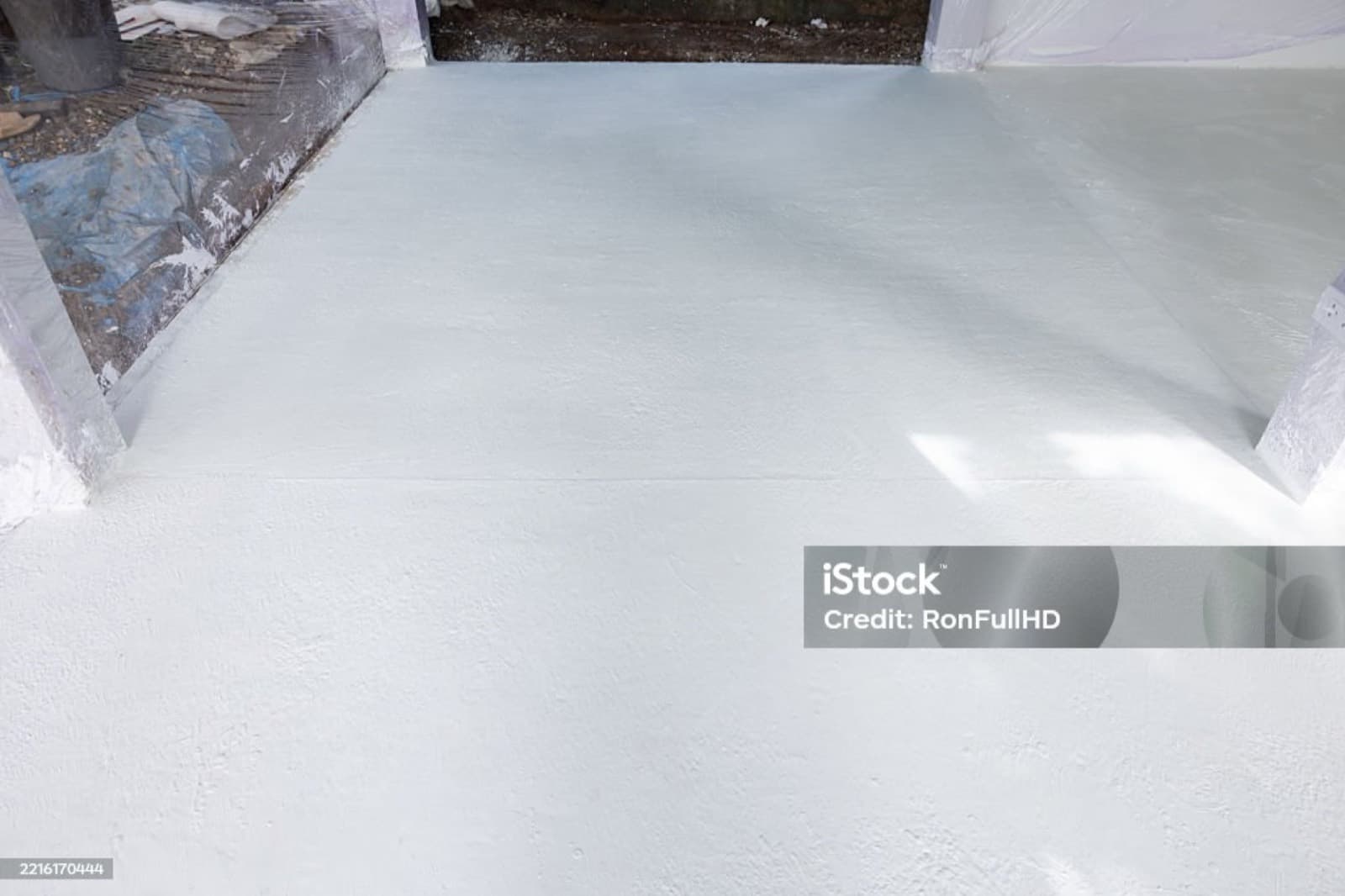
Curing
As it cures, the reaction of cement and water gives terrazzo its strength; after a few days it can be worked.
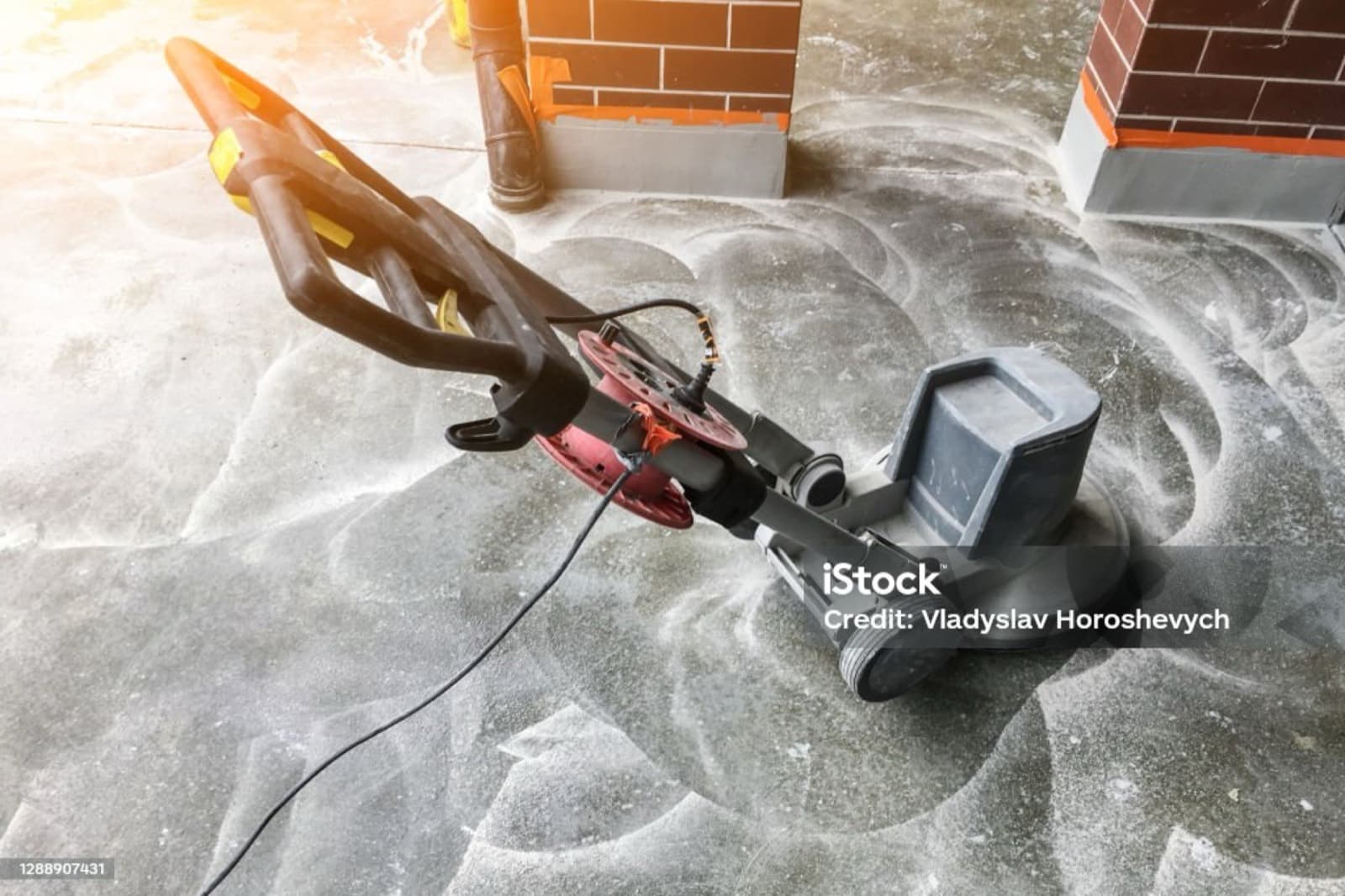
Grinding
Grinding smooths the surface, brings out the marble particles and creates the characteristic pattern.
What is terrazzo?
Terrazzo is a mineral floor covering that has been known since antiquity. It is a mix of aggregates selected for their colour, water, pigments and binders such as lime and cement. After curing, the mortar is ground and, if required, polished to a gloss.
Modern cast stone, known as terrazzo tiles, is produced industrially as ground tiles and laid on site in a mortar bed. The traditional seamless method on site, common until the middle of the 20th century, is called in-situ or poured terrazzo.
In Germany, terrazzo floors are regulated by DIN 18500-1.
Your benefits
High-quality materials
Our terrazzo products are made from high-quality building materials and meet high quality standards.
Individual design
Create your own design. We offer a wide choice of colours, sizes and surfaces.
Durability
Terrazzo is known for its longevity. Our terrazzo products are robust and hard-wearing.
Production
Our terrazzo is produced in Italy. The plant is fully automated; the recipe for every terrazzo type is transmitted digitally.
Four surfaces, available for every colour
Honed
R9 / R10The most common finish: smooth and matt with high slip resistance (R9 or R10). Suitable for public and private areas.
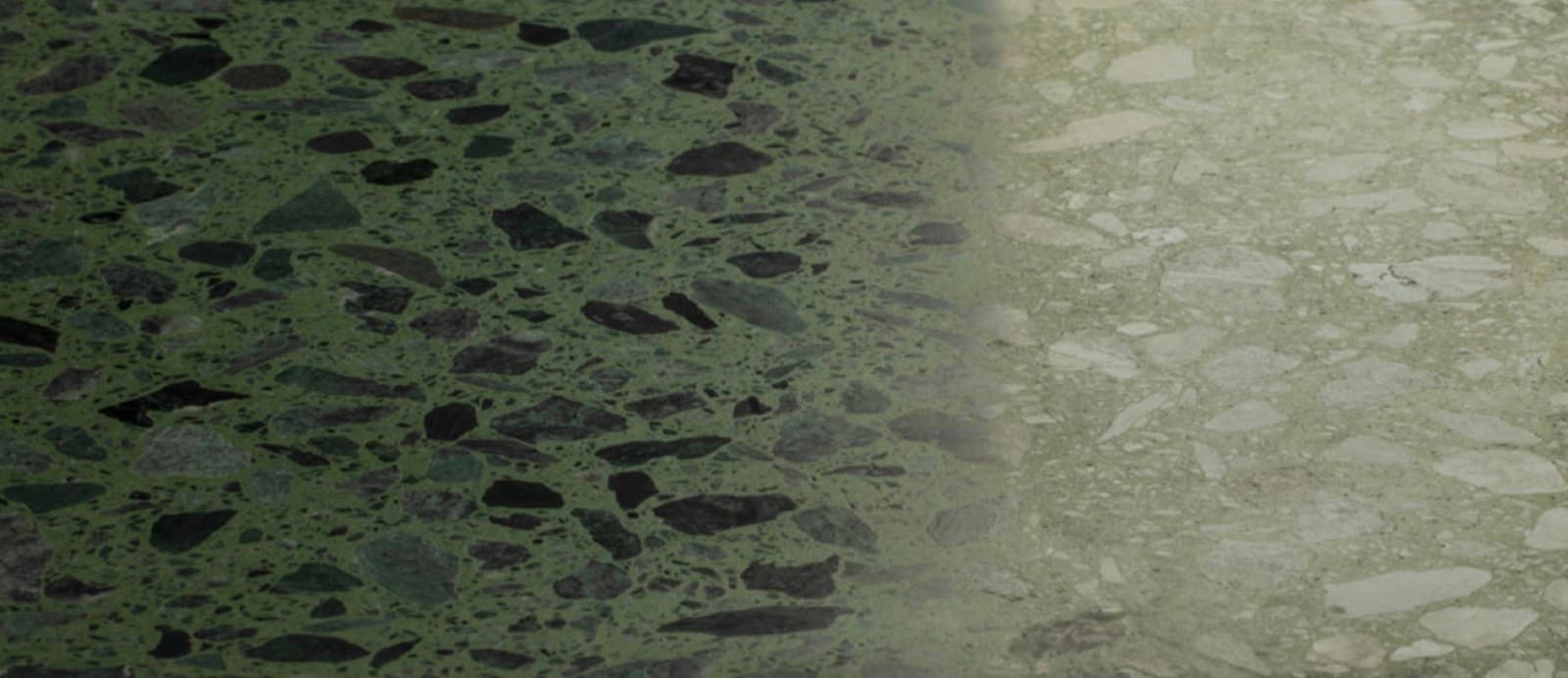
Polished
IndoorsReflections bring out the character of this finish. As it can be slippery when wet, it is mostly used indoors.
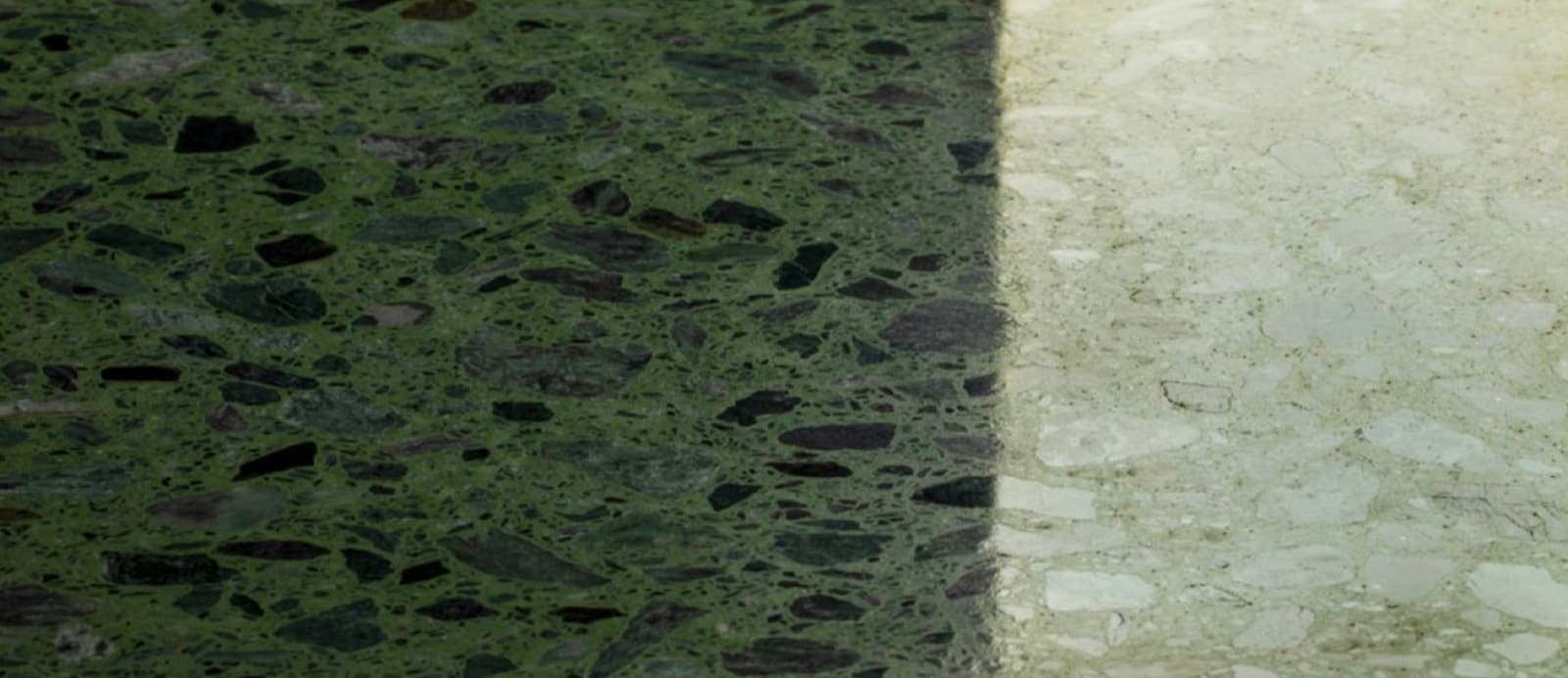
Brushed
Slip-resistantCoarse metal brushes roughen the cement matrix. The result is a raised surface with a slight, tangible orange-peel texture.
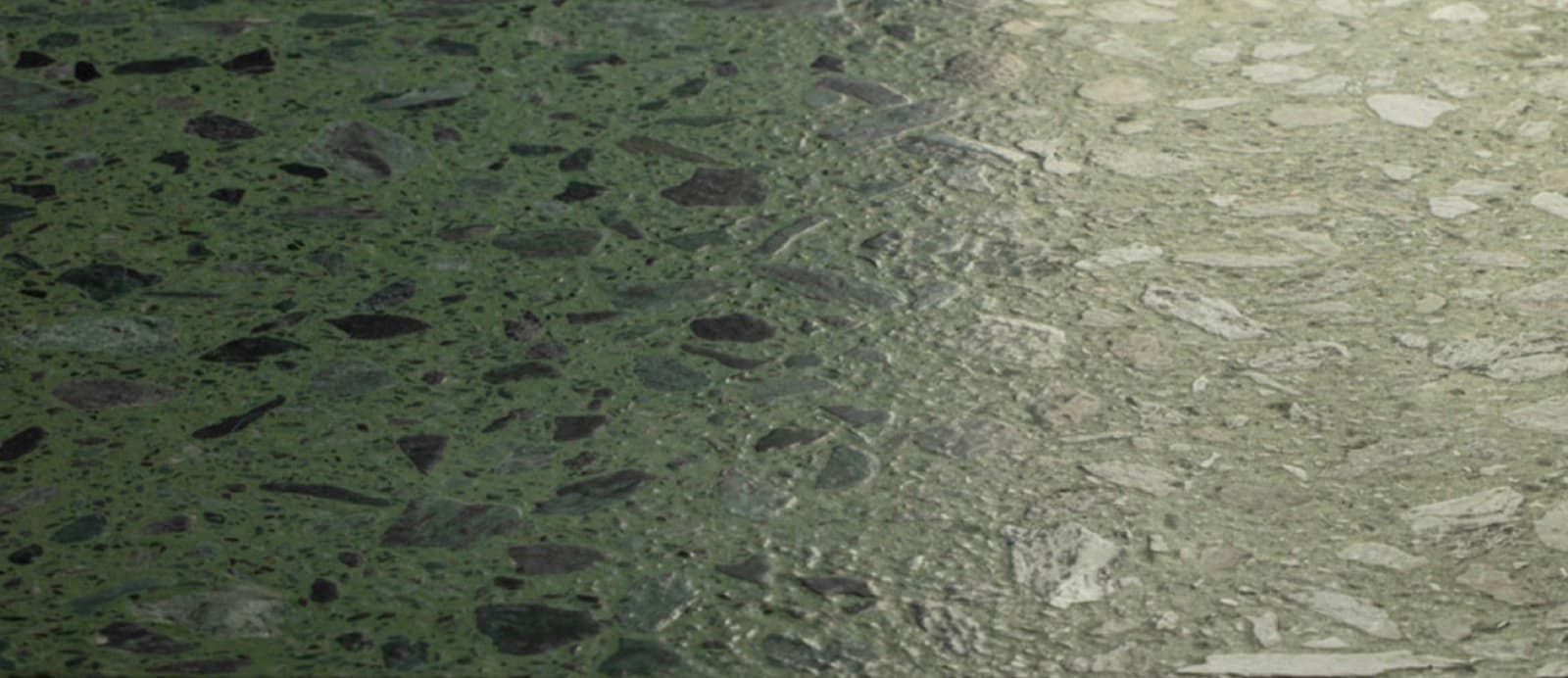
Bush-hammered
OutdoorsPointed diamond tools remove small amounts of material. The result is a rough yet even surface, ideal for outdoor floors and walls.